

In conflict, once we understand the issue and what’s important to each of us, how do we identify the best solution? In this interactive workshop (the second of two sessions on conflict skills and process at the conference), participants will learn how to move from understanding to concrete solution, using a hypothetical poly relationship conflict scenario. We will cover best practices for brainstorming solutions, and how to use what we understand about what’s important to each person to evaluate possible solutions, in order to find what will work best for everyone and decide on a path forward. Participants will also get practical tools to respond when dynamics get challenging, and increase their self-awareness around their own conflict styles, including asserting what is important to them and receiving what others express.
Conflict Process - 2
Finding a Solution Together
Friday, May 1st
1:30 pm
Room: Tempe
101 / 201
Key Takeaways
1.
Once we’ve understood the conflict and identified what matters to each of us, we can brainstorm possible solutions, look together at how well they meet each of our needs and interests, and find the combination of options that works best for everyone.
2.
In doing this, we can benefit from understanding how we tend to behave in conflict situations (our conflict styles), how others behave, and how different styles interact.
3.
We can revisit our agreements about how we’re having the conversation if needed to deal with triggers or dynamics that are coming up.
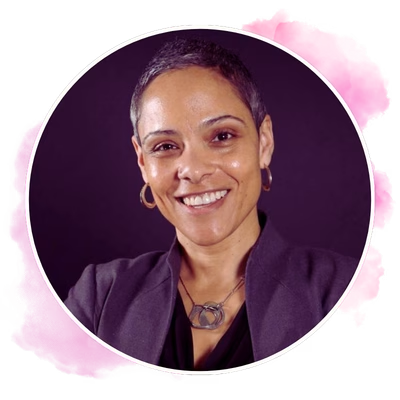
Marta Elena Esquilin is a social justice educator, higher education administrator, conflict professional, and organizational consultant. Her work spans across multiple sectors and environments including secondary schools, non-profit organizations, social service agencies, corporate settings, and higher education institutions around the United States. She received her Master’s Degree in 2003 from Teachers College, Columbia University, and in 2005, under the leadership of Dr. Derald Wing Sue, she was a co-author of the seminal article, “Racial microaggressions in everyday life: Implications for clinical practice”. (American Psychologist, 62(4), 271-286.)
Melanie Rowen (she/her) is a queer, non-monogamous mediator and conflict coach who also frequently trains individuals and groups on conflict resolution skills and process. A recovering lawyer, Melanie previously worked on queer civil rights in family law settings, including relationship recognition, issues involving trans and non-binary youth and their families, and issues facing LGBTQI elders. Melanie also lives with MS and has a long history of engagement in disability justice. She mediates and teaches from the Understanding-Based Model of conflict resolution, which emphasizes consent-based process and supporting individual autonomy while honoring connection.