

Conflict naturally occurs in every human relationship. It can be uncomfortable or stressful, and we may resist even identifying it, but learning conflict conversation skills and process can help. In this interactive workshop (the first of two sessions on conflict at the conference), participants will explore the first stages of working together in conflict: preparing for the conversation through self-reflection, deciding how we’re going to work together, and understanding the problem, including identifying together what is important to each person. To support this exploration, participants will practice listening to truly understand, and experience that listening and understanding from others in the session.

Conflict Process - 1
Understanding the Issue
Friday, May 1st
10:30 am
Room: Tempe
101 / 102
Key Takeaways
1.
To prepare for difficult relationship conversations, we can start with self-reflection on our motivations, feelings and goals and on what we think the other person’s perspective is. Getting active listening support from someone else can help us do this prep.
2.
We can set the table for resolving conflicts by starting with a conversation about how we’re going to have this conversation, structuring the process together.
3.
Understanding the issue means going underneath what each person is asking for to figure out what is really important to them, and gathering all the information about the broader situation to make sure that everyone understands the reality they are facing together.
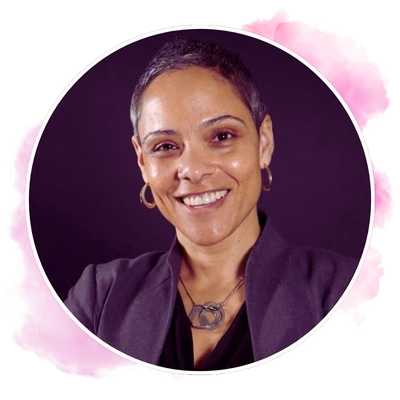
Marta Elena Esquilin is a social justice educator, higher education administrator, conflict professional, and organizational consultant. Her work spans across multiple sectors and environments including secondary schools, non-profit organizations, social service agencies, corporate settings, and higher education institutions around the United States. She received her Master’s Degree in 2003 from Teachers College, Columbia University, and in 2005, under the leadership of Dr. Derald Wing Sue, she was a co-author of the seminal article, “Racial microaggressions in everyday life: Implications for clinical practice”. (American Psychologist, 62(4), 271-286.)
Melanie Rowen (she/her) is a queer, non-monogamous mediator and conflict coach who also frequently trains individuals and groups on conflict resolution skills and process. A recovering lawyer, Melanie previously worked on queer civil rights in family law settings, including relationship recognition, issues involving trans and non-binary youth and their families, and issues facing LGBTQI elders. Melanie also lives with MS and has a long history of engagement in disability justice. She mediates and teaches from the Understanding-Based Model of conflict resolution, which emphasizes consent-based process and supporting individual autonomy while honoring connection.