
Discover this years speakers.
Southwest Love Fest 2025
View details for each of our sessions below.
Friday April 4th 2025
Poly Psychologists Talk ADHD & Non-Monogamy Dr. Han Ren & Dr. Manijeh Badiee

Self Track
- Friday, April 4th 2025
- 10:00A - 11:30A
- CEU Eligible
Our interactive workshop focuses on ADHD and nonmonogamy, including challenges, benefits and strategies. Our workshop reflects Southwest Love's self and inner circle tracks. For self-track, we will provide scientific and personal experiences to enhance the self-awareness of people with ADHD. We will address topics like complex trauma, emotion dysregulation and rejection sensitivity dysphoria from a decolonizing perspective. Our workshop will also reflect the inner circle of intimate relationships, covering topics like new relationship energy and communication.
Key Takeaways:
1. Understanding how and why ADHD and nonmonogamy are linked, including challenges and benefits. Relevant science will be applied from a critical, decolonizing framework.
2. Practice and learn self-strategies for navigating ADHD-related challenges, like mindfulness. Strategies can be used with self or therapy clients.
3. Develop relational skills that we need to navigate ADHD in our connections, like asking for help, expressing when we are not able to talk, and setting boundaries. We hope that the skills we practice in small groups can help people with ADHD and those who love them.
The many-wallet problem: How to manage finances when you're poly Mike Pumphrey

Inner Circle Track
- Friday, April 4th 2025
- 10:00A - 11:30A
Money is one of the hardest areas with which to relate. Many of us are more comfortable talking about our sex lives than even mentioning our finances. And yet, money can affect every aspect of our lives, and money struggles are one of the biggest sources of relationship conflict. That's challenging enough in monogamy, but what happens when you add in multiple relationships? It gets complicated. But it doesn't have to be. In this talk, participants will learn how to start having conversations around money as a way to better relate to their partners. We'll cover all the different ways that people can share finances, the differences between mono and poly financial arrangements, and how to build ethical, intentional arrangements that serve everyone involved. We'll also cover how to overcome through anxiety or avoidance—your own and your partners—so you can be more intentional with your finances in your relationship. After all, even though money can be a source of conflict, it can also be an opportunity for greater connection too.
Key Takeaways:
1. Learn the different ways that partners can share finances.
2. Learn how to build a financial arrangement that works for everyone.
3. Learn how to manage anxiety and avoidance around money topics.
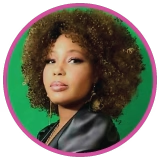
Royal Rumble: The Consent Showdown Tyeisha Covington (Mrs. Dee Supreme)
Community Track
- Friday, April 4th 2025
- 10:00A - 11:30A
"Royal Rumble: The Consent Showdown," an interactive and competitive game designed to test your knowledge of consent! In this lively session, participants will engage in a Jeopardy-style quiz, tackling consent scenarios, communication challenges, and boundary-setting dilemmas. The winner will earn ultimate bragging rights and be crowned champion by Mrs. Dee, the Consent Queen! Whether you're a consent expert or eager to learn more, this friendly clash of ideas promises fun, education, and empowerment. Join us for an unforgettable experience that blends competition with valuable insights into building a culture of consent!
Key Takeaways:
1. Test consent knowledge through an interactive Jeopardy-style game.
2. Tackle real-life scenarios and communication challenges.
3. Learn while having fun in a competitive, educational setting.
Beyond Jealousy: Fostering Growth and Connection Lindsay Hayes

Self Track
- Friday, April 4th 2025
- 1:30P - 3:00P
- CEU Eligible
Nonmonogamy can bring up unexpected emotions—hurt, frustration, jealousy—that can feel hard to name, let alone process. It’s easy to think you shouldn’t feel this way, but what if those feelings are an opportunity for growth instead of shame?
In this workshop, we’ll explore those tough moments together in a supportive, validating space. You’ll learn to identify and work through challenging emotions, shift out of defensiveness, and communicate more effectively with your partners. Through group connection and hands-on practice, you’ll gain tools to turn emotional roadblocks into opportunities for deeper self-awareness and stronger relationships. Leave with renewed confidence, practical conflict-resolution skills, and a clearer path to thriving in your nonmonogamous journey.
Key Takeaways:
1. Enhanced Emotional Literacy – recognize your defense mechanisms and manage what’s driving them.
2. Improved Self-Awareness and Communicaiton – Recognize patterns and build skills for productive, honest conversations.
3. Build Resilience – Develop strategies to thrive through tough moments.
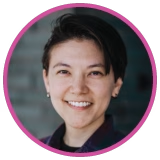
Liberatory Consent: The Next Generation Consent Framework of Embodied Boundaries, Power Awareness, and Co-created Decisions Sam Duong Woloszynski
Inner Circle Track
- Friday, April 4th 2025
- 1:30P - 3:00P
Enthusiastic Consent is no longer the gold standard. Liberatory Consent, an embodied, social-emotional framework, is a practice built on set of progressive skills. It will take you beyond consent for harm reduction and into a practice of consent for more deeply authentic relationships.
Insights and theoretical knowledge are helpful, but not enough to create change. We need to practice skills and build capacity in order to create the equitable relationships we want. In this workshop, you’ll be invited into experiential learning activities that will help you notice and communicate your limits and desires, create space for your partners to do the same, build awareness of power differentials, and continuously co-create agreements about shared activities.
Key Takeaways:
1. An introduction to the Liberatory Consent model and skills framework, and how it differs from other common models of consent.
2. An opportunity to map their embodied yes-to-no spectrum.
3. An opportunity to practice offers and requests.
4. An introduction to power differentials and intersectionality, and how Liberatory Consent skills can be used to rebalance power in more egalitarian relationships.
Love in the Time of Fascism: Building Resilient Communities Mike Donovan & Erin Hansborough

Community Track
- Friday, April 4th 2025
- 1:30P - 3:00P
Community planning doesn’t have to be reserved exclusively for government entities - especially in a time when those entities are becoming increasingly fascist and exclusionary. We can actually use the lessons and tools of community planning to build communities that are resilient in the face of governmental attempts to control access to resources or advance policies that are harmful to our neighbors and ourselves.
Nonmonogamous people are well-positioned for cooperative organizing of communities, whether those communities rely on cohabitation or not, due to our expansive relationship structures and commitment to care that extends beyond a traditional family structure.
This discussion will offer an understanding of nonmonogamy as an anti-capitalist practice, present examples of ways to start mutual aid and cooperative practices (such as group buys, sharing of tangible resources such as tools or vehicles, and cooperative food preparation), and touch on communication tools used by mediation professionals that can help communities become established and grow in ways that are inclusive of difference.
Key Takeaways:
1. Attendees will learn how to conceptualize nonmonogamy as an anti-capitalist practice.
2. We will demonstrate how to use community planning tools like Community Resource Assessments to establish and fortify hyperlocal communities capable of bartering and sharing resources.
3. We will teach simple mediation skills and tools (especially how to find common ground/mutual benefit while still allowing room for difference) for community-level communication practices that encourage inclusion and aid in conflict resolution.
We Can Fics That: The Surprising Therapeutic Value of Fanfiction Emily Viola

Self Track
- CEU Eligible
- Friday, April 4th 2025
- 3:30P - 5:00P
Fan fiction, the art of creating new, written stories using characters from already existing media, has long been dismissed as being low class, derivative, and stolen work. And yet, it remains wildly popular among millions of fans and in numerous online communities.
This interactive presentation provides background on fan fiction and why it is so popular, with a focus on the therapeutic and healing aspects of the craft. Specifically, we will explore how fan fiction can aid in self-exploration, healing from sexual trauma, and relationship building. Participants will have the opportunity to begin developing their own fan fiction if the inspiration strikes!
Key Takeaways:
1. A definition and overview of the art of fan fiction.
2. An understanding of the therapeutic components of fan fiction.
3. Knowledge of how to personally utilize reading and/or writing fan fiction for healing.
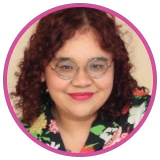
Practicing Accountability in Polyamory: Moving Beyond Conflict to Collective Healing Christa Lei
Inner Circle Track
- Friday, April 4th 2025
- 3:30P - 5:00P
Using a transformative justice lens, this session explores ways to foster accountability and navigate conflict within polyamorous relationships. We’ll discuss techniques for building trust, managing ruptures, and healing together, creating a blueprint for resilient relationships.
Key Takeaways:
1. Participants will learn transformative justice techniques to foster accountability and trust in polyamorous relationships.
2. They will gain tools for navigating conflicts and repairing relational ruptures in constructive ways.
3. Participants will practice these tools for building resilient, healing-centered relationships.
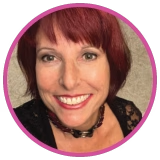
Normalizing Non-Monogamy: What We Can Do Natalie Davis
Community Track
- Friday, April 4th 2025
- 3:30P - 5:00P
ENM and Polyamory are increasingly in the news and public psyche. The time is now to push the needle forward to normalize what has been a marginalized relationship model. What can we as non-monogamists and polyamorists and monogamishists do to normalize non-monogamy – to make it less scary, fringe, unacceptable and more accessible, understood, acceptable, and desirable? We, who are experienced and passionate about our way of life, are the vanguard of a movement. While we want to help bring the joy and benefit of ENM into the light, we may not know how.
This presentation will address:
- The current legal landscape of ENM
- What each of us can do within our personal circumstances to normalize non-monogamy
- Exploring the practical limitations and possibilities
Key Takeaways:
1. Action items
2. Activism resources
3. Checklist on what you can do
Saturday April 5th 2025
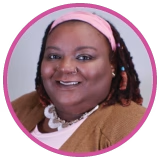
Black Girl Magic: Witchcraft as Sexual Freedom Malesha Griffin
Self Track
- CEU Eligible
- Saturday, April 5th 2025
- 8:00A - 9:30A
Throughout American history, Black people have consistently been policed and scrutinized. This scrutiny magnifies when looking at the intersectionality of race and gender for Black women. America’s history of negative sexual stereotypes for Black women in collaboration with the strict rules and guidelines of the Black Church, have left many Black women feeling dissatisfied with their intimate relationships. A return to indigenous practices, often referred to historically and recently, as witchcraft, these practices give newfound freedom to Black women. This presentation dives deeper into the lived and embodied experiences of Black women in the United States who have reclaimed long lost practice and their sexual freedom and autonomy.
Key Takeaways:
1. Knowledge of indigenous practices.
2. Connection to community.
3. Understanding of their own potential freedom and autonomy.
Threesomes: Communication, Consent, and Embracing Alternative Sexuality Leanne Yau

Inner Circle Track
- Joining Remotely
- Saturday, April 5th 2025
- 8:00A - 9:30A
Threesomes are the world's most common sexual fantasy - but why do people want one, and how do you go about actually having one? Non-monogamy educator Leanne Yau will cover the essentials to have a safe, consensual threesome, answering questions like: How do you effectively communicate your boundaries and desires? What should you discuss before, during, and after with your partner(s), so that everyone has a positive experience? How might your approach differ if you're coming into this as a single person or as a couple, and how can you be considerate of the dynamics between everyone involved?
Key Takeaways:
1. Consider the needs of all parties involved, not just the couple who are opening up.
2. Make sure you are doing non-monogamy for the right reasons - and don't drag others into your mess!
3. Group sex can be a beautiful experience and a way to embrace your sexuality, your body, and learn about different dynamics and desires.
PolyAm Families: Raising Kids in Community - Skills to Cultivate Love and Support for Our Kids Dr. David Pascale Hague

Community Track
- CEU Eligible
- Saturday, April 5th 2025
- 8:00A - 9:30A
This interactive presentation will explore the intersections of mental health and parenting within polyamorous families, highlighting both the unique strengths and challenges of navigating these roles. Drawing from real-world examples and qualitative research, licensed psychologist Dr. David Pascale Hague will examine the psychological dynamics at play in polyamorous child-raising, including the impact of jealousy, emotional burnout, and the stigma surrounding non-traditional family structures. The audience will be engaged in interactive activities to explore their needs, desires, and hopes for parenting in polyam relationships. Participants will leave with functional and practical skills to utilize in their families and relationships.
Particular focus will be given to the mental health needs of polyamorous caregivers/parents, who must balance multiple relationships while managing the complexities of co-parenting and providing stable, nurturing environments for their children. The author and audience will explore the benefits that polyamorous families can offer adults and children, such as increased emotional support and diverse role models for children, while also addressing the logistical, legal, and social challenges they may face.
The presentation aims to foster greater understanding, acceptance, and support for polyamory as a valid and fulfilling family model by addressing misconceptions, emphasizing communication strategies, and exploring resources available for polyamorous individuals and families. Attendees will leave with actionable tools to navigate the intersection of mental health and parenting in polyamorous contexts and a deeper appreciation for the resilience and complexity of polyamorous family dynamics.
Key Takeaways:
1. Raising children in a polyam community brings about unique strengths that provide unique love and skills to the children in these families.
2. Challenges that occur with raising kids in polyam families require communication and skills that can be cultivated over time.
3. The social stigma of being a polyam family may put our communities in harm's way and requires us to cultivate proactive coping skills will prevent negative mental health symptoms.
Awakening the Dominant Within: A Shy Girl's Guide to FemDom Tyeisha Covington (Mrs. Dee Supreme)
Self Track
- Saturday, April 5th 2025
- 1:30P - 3:00P
Join our empowering workshop as we tackle shyness, providing tools for confidence reclamation. Drawing inspiration from FemDom archetypes, including insights from Dominatrixes like Mrs. Dee, we'll explore their application to your journey. Covering 'Impact Play 101,' confidence-building, consent, and negotiation skills, this event offers foundational BDSM insights. Whether you're a novice or seasoned explorer, our supportive space ensures you leave empowered and ready to embrace your Dominant self.
Key Takeaways:
1. Build confidence using tools inspired by Dominatrix archetypes.
2. Learn BDSM basics like impact play, negotiation, and consent.
3. Leave empowered to embrace your Dominant side.
Kink 101: Safety Tips, Language, and Tools for Beginners (or Long-Timers) Sara Neptune

Inner Circle Track
- Saturday, April 5th 2025
- 10:00A - 11:30A
"Kink 101: Safety Tips, Language, and Tools for Beginners (or Long-Timers)" will serve as an introduction to kink language, kinky tools, dominance, submission, and safety tips for exploring new ground. This session will be most helpful for new people, but will offer plenty of tools and conversation that will interest kinksters of all experience levels.
Key Takeaways:
"Kink 101: Safety Tips, Language, and Tools for Beginners (or Long-Timers)" attendees will leave with information about common language in BDSM, safety information on the most common kinks, and practice saying "yes" and "no" in a low stakes environment through a group activity.
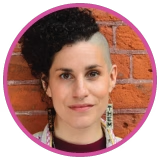
Poking the Bear: Let's talk hierarchy PolyaMarla (Marla Schreiber)
Community Track
- CEU Eligible
- Saturday, April 5th 2025
- 10:00A - 11:30A
Hierarchy in polyamory, and other nonmonogamous relationships, is a hot topic that invokes many different feelings and perspectives within our communities. In this workshop, we will:
- Define ‘hierarchy’ in order to come to a mutual understanding about the terminology.
- Identify the ways that hierarchy can carry over from the paradigm of mononormativity.
- Discuss ‘sneakyarchy’ and how it can cause harm in our relationships.
- Explore different perspectives about hierarchy in order to support participants in discovering what makes the most sense in their own lives.
- Strategize harm reduction practices that offer compassion and empathy for people at different stages of their nonmonogamous explorations.
Key Takeaways:
1. Relationship values and ethics are nuanced and complex and require critical thinking and openness to inquire effectively.
2. How to investigate “hot topics” with compassion and curiosity, rather than judgment and cruelty.
3. Understanding the connection between hierarchy in nonmonogamous relationships and pervasive social paradigms (e.g. mononormativity), and the patience required to deconstruct these paradigms.
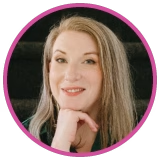
"There's a part of me that..." Using Parts Work to effectively navigate challenges in non-monogamy Heidi Savell
Self Track
- CEU Eligible
- Saturday, April 5th 2025
- 10:00A - 11:30P
As you navigate non-monogamy, do you ever notice that you might feel two very different ways about something? Maybe there is a part of you that is totally on board with everything non-monogamy stands for, but also another part that feels anxious, or scared, or territorial? Or maybe you sometimes get an urge to act out in a way you *know* you'll regret later?
If that sounds familiar, then congratulations! You are already in touch with some of your different parts, and you are someone who could benefit from engaging in Parts Work.
Parts Work is a framework that can help you understand and respond to various feelings, thoughts, and behaviors that may at times seem contradictory or self-defeating. It has been used in various healing modalities for decades to support people in increasing self awareness and decreasing distress. In my 10+ years working with people navigating non-monogamy, I have found parts work to be a powerful framework to address and resolve feelings of anger, jealousy, insecurity, and anxiety in my non-monogamous clients.
Key Takeaways:
1. Learn effective strategies for addressing feelings of anger, jealousy, and fear using parts work.
2. Explore how your own parts impact your thoughts, feelings, and actions.
3. Gain an understanding of how to apply the parts work framework to non-monogamy challenges.
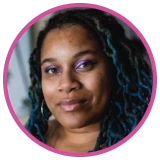
The Relationship Blueprint: Crafting Agreements and Navigating Negotiations in Ethical Non-Monogamy Deondra A. Moore
Inner Circle Track
- Saturday, April 5th 2025
- 1:30P - 3:00P
With this workshop, I guide participants through the essential elements of building intentional, adaptable agreements in their relationships.
Drawing on the unique dynamics of ENM, this workshop invites individuals and partners to explore how clear communication and collaborative negotiation can transform their connections into spaces of trust, growth, and mutual empowerment.
Participants will leave with practical tools for understanding their values and boundaries, crafting agreements tailored to their unique needs, and revisiting those agreements as life evolves. They’ll also learn to approach conflict as an opportunity for connection and problem-solving, rather than as a roadblock. This session emphasizes inclusivity and creativity, ensuring the content resonates with diverse relationship structures and experiences.
Ultimately, my goal is for attendees to feel both empowered and equipped to cultivate relationships that honor individuality while fostering a shared vision for connection and growth.
Key Takeaways:
1. A Practical Framework for ENM Relationship Agreements.
2. Tools for Effective Communication and Negotiation.
3. Conflict as an Opportunity for Growth.
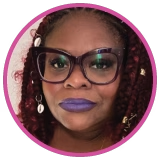
Intentional Polyamory: Creating Lives that Support Our Relationships Chaneé Jackson Kendall
Community Track
- Saturday, April 5th 2025
- 1:30P - 3:00P
Many people arrive at non-monogamy by accident, or as the end of a pattern of exploration. This workshop provides an overview of the Intentional Polyamory framework—created to support individuals in building polyamorous relationships rooted in self-awareness, communication, and liberation. You’ll learn about the four pillars of Intentional Polyamory: and how these core principles guide individuals in creating fulfilling and sustainable non-monogamous relationships. Through this session, we’ll explore why Intentional Polyamory was developed as a transformative and liberatory approach to love, focusing on autonomy, emotional resilience, and decolonizing relationship norms.
The workshop is interactive and I love to stop and take questions, and I invite the audience in.
Key Takeaways:
1. Happy & healthy polyamorous relationships are built on purpose.
2. Alignment is crucial in selecting partners with similar goals and desires.
3. Resources to learn more about building an intentionally polyamorous life.
Mind body healing: stress, trauma, and the nervous system Sam Duong Woloszynski
Self Track
- Saturday, April 5th 2025
- 3:30P - 5:00P
Elevate your self-care practice and learn about how stress and trauma are held in the body. This workshop will give you an overview of polyvagal theory, common stress/trauma responses (fight, fight, freeze, and more), and how to recognize different states of the nervous system. Trauma is so common and often misunderstood - if you don’t have trauma yourself, chances are that you know and love someone that does! You’ll learn entry-level grounding exercises for self-regulation or co-regulation that you can use to nurture more supportive relationships.
Key Takeaways:
1. Participants will be able to describe the basics of polyvagal theory, autonomic nervous system states, and common responses to stress and threats.
2. Participants will be able to recall and utilize key components of trauma first-aid practices.
3. Participants will be able to identify their strategies for self-soothing in times of activation and ongoing self-care practices.
4. Participants will be able to create care plans for managing stress and threat that can be used solo or with their communities.
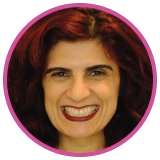
Cultivating liberationships: How meaningful connections can empower us to soar Dr. Manijeh Badiee
Inner Circle Track
- CEU Eligible
- Saturday, April 5th 2025
- 3:30P - 5:00P
My interactive workshop will focus on how to find liberation through connection, or liberationships. This is a term cited in my scientific article with Evita Sawyers entitled Black queer femme and non-binary individuals’ polyamory: An act of liberation published in the journal Sexualities. In the workshop, I will combine lecture, small group discussions, experiential activities, and self-reflection exercises. I will cover intrapersonal and interpersonal strategies for liberationships. The intrapersonal reflects the self-track and will include topics like emotion regulation and self-compassion. The interpersonal skills reflect the inner circle track with subjects like green flags of liberation, discussing oppression-based trauma, and releasing the facade of 'individualism.'
Key Takeaways:
1. Learn and practice intrapersonal strategies for liberationships, This could include cognitive, behavioral, emotional and spiritual strategies that are grounded in science but are applied with a decolonizing framework.
2. Develop interpersonal skills for liberationships, such as nonviolent communication and learning about our partners’/persons’ identities, including oppression they face.
Financial Abuse: Identifying, Confronting, and Moving Beyond Erin Hansborough & Mike Donovan

Community Track
- Saturday, April 5th 2025
- 3:30P - 5:00P
Research shows that 99% of domestic violence cases include financial abuse, and financial abuse is cited by survivors as one of the primary reasons they stayed with their abuser. Among those who have heard of financial abuse at all, it’s often narrowly understood as one partner preventing the other from working or having access to money/household funds. But this is only one version of financial abuse. More broadly, financial abuse is an experience in which one person shuts down the other person’s ability to care for themselves, make decisions for themselves, or have independence in determining their future by affecting that person’s finances. It can manifest in subtle or overt ways, including: a capable adult refusing to contribute to the resources of the household while continuing to use (or overuse) those resources; hiding financial information; or racking up debt on joint accounts.
Financial abuse is more common than we realize. How do we as a community become more adept at (1) recognizing financial abuse, (2) supporting survivors, and (3) creating communities in which the harm from this type of abuse is diminished? People in nonmonogamous communities may be uniquely positioned to help each other when financial abuse is present, if we are able to establish expanded networks of care and hold an ethos of breaking down traditional power imbalances. This workshop will offer an expansive definition of what financial abuse is, and how to recognize it when it’s happening; tools for confronting financial abusers; and ways to support survivors both during and after financial abuse.
Key Takeaways:
1. Attendees will gain a clearer understanding of what financial abuse is and what it might look like.
2. We will present communication and conflict resolutions tools for addressing financial abuse.
3. We will offer suggestions for community care practices that mitigate isolation for financial abuse victims and support them in changing their situation, whether that means getting the abusive behavior to stop or helping them leave the abuser.
Sunday April 6th 2025
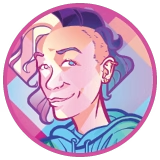
Philosophical Concepts for Relating Differently Nova Abbott
Self Track
- Sunday, April 6th 2025
- 8:00A - 9:30A
Often, relating differently with others is paired with sense of curiosity about yourself and those you choose to connect with. Philosophy offers ideas for the curious mind to explore, and in this interactive workshop, we’ll play with these concepts and how they shape the non-monogamous journey (and life really). You’ll be introduced to concepts such as Dialectic Thinking, Facticity and Transcendence, the Michelangelo Phenomenon, and more, and then break into small groups to get a chance to discuss these ideas with other attendees, building connections with others as you explore.
Key Takeaways:
1. Increased curiosity.
2. A chance to connect with other deep thinkers.
3. New terms to explore and apply to your relationships.
Navigating Dysphoria for Polyamorous Trans People (and their partners) Sara Neptune
Inner Circle Track
- Sunday, April 6th 2025
- 8:00A - 9:30A
"Navigating Dysphoria for Polyamorous Trans People (and their partners)" will help participants feel more aware of their own triggers for dysphoria, gain skills to communicate them before sex, and build confidence addressing harm caused by partners if it comes up. This session will be focused on trans people, but is open to cisgender allies who have trans partners or want to learn how to better support future trans partners.
Key Takeaways:
1. Notice dysphoria triggers.
2. Learn communication tools for sex involving trans folks.
3. Provide new frameworks for thinking about bodies and sexual pleasure.
Borderline Personality Disorder and Non-Monogamy: Fighting the Stigma, Helping our Community Lilyan Smith-Moore, LPC

Community Track
- CEU Eligible
- Sunday, April 6th 2025
- 8:00A - 9:30A
There persists in our community a belief that one should only practice non-monogamy if they have mastered certain interpersonal skills, such as a healthy response to jealousy, healthy communication patterns, and awareness of their own trauma responses. While this belief is well-intentioned, clinician Lilyan Smith-Moore invites you to explore and challenge this belief in the context of Disability Justice. Members in our community who live with Borderline Personality Disorder (BPD), or other diagnoses resulting from interpersonal trauma, often struggle with healthy communication patterns and interpersonal skills. While non-monogamy can be healing and joyful for these individuals, it can also bring up interpersonal trauma that is extremely dysregulating.
To address this dysregulation, clients may seek therapy. However, therapists may feel they have little to offer their clients who are continually triggered by interpersonal dynamics in non-monogamy. Therefore, a common response is to tell their clients with BPD to stop pursuing non-monogamy, or to wait until they are in recovery from the diagnosis. Unfortunately, this response can cause clients to feel even more isolated, hopeless, and misunderstood.
In this presentation, Lilyan Smith-Moore shares how clinicians, and our community as a whole, can help and support our members who live with BPD. She draws on her 10 years’ experience as a clinician and clinical supervisor, as well as on her own personal experience as a partner of a brave soul who is in recovery from BPD.
While this event is tailored for mental health professionals, other community members will also benefit from sharing their own experiences, gaining insight about this topic, and brainstorming responses to this presentation’s call for activism.
Key Takeaways:
1. Summarize the concept of mental health ableism, specifically personality disorder ableism, and identify how it is present non-monogamy community.
2. Summarize the concept of Disability Justice and how it can be applied in our non-monogamy community when supporting those with BPD.
3. Name at least two approaches or strategies that clinicians can use to help their non-monogamous clients who live with BPD.
The Hinge Factor: Navigating Relationships with Confidence and Balance Lindsay Hayes
Self Track
- CEU Eligible
- Sunday, April 6th 2025
- 10:00A - 11:30A
Being a hinge partner in nonmonogamous relationships is no small feat—it’s a juggling act of meeting partners’ needs, managing life’s demands, and carving out time for yourself. If you’ve ever felt overwhelmed by this role, you’re not alone.
This workshop dives into the unique challenges hinge partners face, based on insights from therapists who work with nonmonogamous clients. Through reflective exercises and guided discussions, you’ll explore how these dynamics affect your relationships and personal well-being.
But it’s not just about identifying struggles—it’s about solutions. I’ll share practical tools and therapist-recommended strategies to help you navigate these challenges with greater ease and confidence. By the end, you’ll have a clearer path toward balance, connection, and a deeper sense of self-assurance in your hinge role.
Come ready to connect, reflect, and leave empowered.
Key Takeaways:
1. Recognize and Understand Challenges – Gain insight into the unique struggles faced by hinge partners, based on expert perspectives.
2. Practical Strategies for Balance and Conflict Resolution – Learn therapist-recommended tools for managing your own needs, supporting partners, and navigating conflicts.
3. Empowerment and Community – Connect with others in similar situations, reflect on your experiences, and leave with practical skills for your hinge role.
Taking the Ass Out of U and Me: The Role of Assumption in Conflict and Communication Emily Viola
Inner Circle Track
- CEU Eligible
- Sunday, April 6th 2025
- 10:00A - 11:30A
There's an old saying that, "When you assume, you make an ass out of you and me". Both in working as a therapist and in engaging in queer and non-monogamous relationships, making assumptions seems to come up frequently as the cause of major conflict and relationship ruptures. This workshop will utilize teaching to provide a trauma informed background about why we make assumptions so often and will provide activities to build both individual and interpersonal skills for reducing conflict in communication by reducing how often we make and act on assumptions. Skills will be pulled from therapies such as DBT and attachment based therapy, as well as conflict resolution and transformative justice. The information will also focus on ideas and skills that are specifically relevant for queer and non-monogamous communities.
Key Takeaways:
1. Reduce conflict in the community through improved communication skills, expand empathy, and increase ability to seek and find understanding.
2. Learn about conflict in the queer and ENM community and how to help clients manage it.
3. Learn skills for improving communication and understanding with clients.
Disability Justice in Relational Spaces: Creating Accessible and Inclusive Relationships Christa Lei
Community Track
- Sunday, April 6th 2025
- 10:00A - 11:30A
In this session, we’ll discuss how to incorporate disability justice into non-monogamous relationships and community spaces. Covering topics like access check-ins, care mapping, and community resilience, this workshop provides frameworks for building more inclusive, accessible relationship networks.
Key Takeaways:
1. Participants will learn practical tools, like access check-ins and care mapping, to foster inclusivity and accessibility in their relationships.
2. They will gain insight into how disability justice principles can strengthen community resilience and relational support networks.
3. Participants will leave with frameworks to create more supportive, accessible spaces in both personal and community relationships.
Join Us at Love Fest Events!
Don't miss out on the chance to connect and learn at our upcoming events. Register now to secure your spot and stay informed about future gatherings. Experience the joy of community and diverse relationship insights with us!